Providing greenhouse heating to protect plants or to assist young seedlings to grow has been a challenge for nurserymen and amateur growers for centuries.
It is thought, following the discovery by chance in 2001 in a historical document, that the first greenhouse heating system was constructed in 15th century AD Korea.
The greenhouse described in this paper was designed to regulate the temperature and humidity requirements of plants and crops in a very precise manner.
Fast forward through history and it is common to see many cultures and Empires using covered, climate controlled structures to enable food and flower production.
Assorted sources of heat have also been used throughout the centuries. Rotting manure placed around the sides of half walled greenhouses was common in the Victorian Era.
It is thought that the first ‘stove’ (heated) greenhouse in the UK was completed at Chelsea Physic Garden by 1681.
Modern engineering continues the evolution of temperature control in garden structures with the use of geothermic pipework which can both heat and cool depending on the seasons.
How hot is hot enough
Avoid wasting energy and money on maintaining higher temperatures than your plants really need.
As a bare minimum, you can keep your heated greenhouse frost free at 37F (3C).
Tender plants are happier with a minimum temperature of 45F (7C)to 50F (10C).
Passive insulation
Avoid heating your entire greenhouse for the sake of a few delicate plants by creating a greenhouse within your greenhouse.
Consider using twin walled polycarbonate sheet or glass to surround plants inside your greenhouse, just like you would create a cold frame in the spring season outdoors.
Bubble wrap is ideal to protect many plants in your greenhouse throughout winters non frozen, warmer months.

Placed around pots and on window glass it will help keep in any heat that is generated through daylight hours.
Consider also placing old plastic bottles filled with water or old house bricks around tender plants. These will absorb passive heat during the day and act like a thermal store, slowly releasing the heat over the cooler hours.
Horticultural fleece is another way to protect your tender specimens. Spread over in multiple layers it can prevent the cold air from getting into contact with seedlings and fragile plants.
Remember to remove fleece during the day to ensure your plants get enough light and ventilation.
Paraffin, candles and terracotta pots
For many hobby gardeners simple, self contained heating solutions are required. Many systems designed for this market, as you would expect, involve burning something and things getting hot.
Please review the application and safety procedures that come with the devices and if in doubt consult a professional.
Things to be aware of include, but are not limited to, carbon monoxide gas, combustable materials close to the heat source and general safety when using sources of heat.
One of the easiest solutions used for many years has been a lit candle covered by a large terracotta plant pot. An evolution of this is the simple oil burner which replaces the candle.
It is also worth noting that anything that burns with a real flame will produce more moisture in the greenhouse, so on milder days you will need to ensure plenty of ventilation to avoid build up of mildew and moulds.
Other popular greenhouse heaters are those fulled by paraffin. These must be used in a well ventilated area as they can produce large amounts of water vapour and potentially harmful chemicals like carbon monoxide and sulphur dioxide.
It’s important to keep the heater clean and rust-free. Keeping your paraffin heater’s wick clean is essential if you want it to run properly.
In order to avoid soot buildup and the production of toxic gases as a result of incomplete combustion, you may also wish to keep the flame shorter.
It is worth noting that paraffin heaters come in convection and radiant varieties. The convection type is usually the one required for a greenhouse.
Electric heaters and mats
If you do decide to use an electrical heater please inspect them regularly for damage. Take particular attention to the cables which should be inspected once the power has been turned off.
Cables can be nibbled by rodents and should always be protected by some form of safety device such as an RCD.
Avoid placing or exposing any electrical device to water and always read the instructions and safety advice supplied. Always use heaters specifically designed for use in greenhouses and damp environments.
Electrical heaters come in two main forms. The tube type and the fan heater.
Tubular greenhouse heating systems are able to keep your greenhouse frost free as well as warm them up to ideal temperatures for the growing of plants over the winter.
They are an extremely versatile piece of heating that will be suited to the vast majority of greenhouse types. Guards are available to remove the chance of people or items getting burnt from prolonged contact .
Fan heaters offer the additional benefit of moving the air within your greenhouse. This has the advantage of avoiding hot spots whilst also helping to control stale corners where bacteria can hide.
Direct heat in the form of a grow mat or powered propagator may also be worth considering.
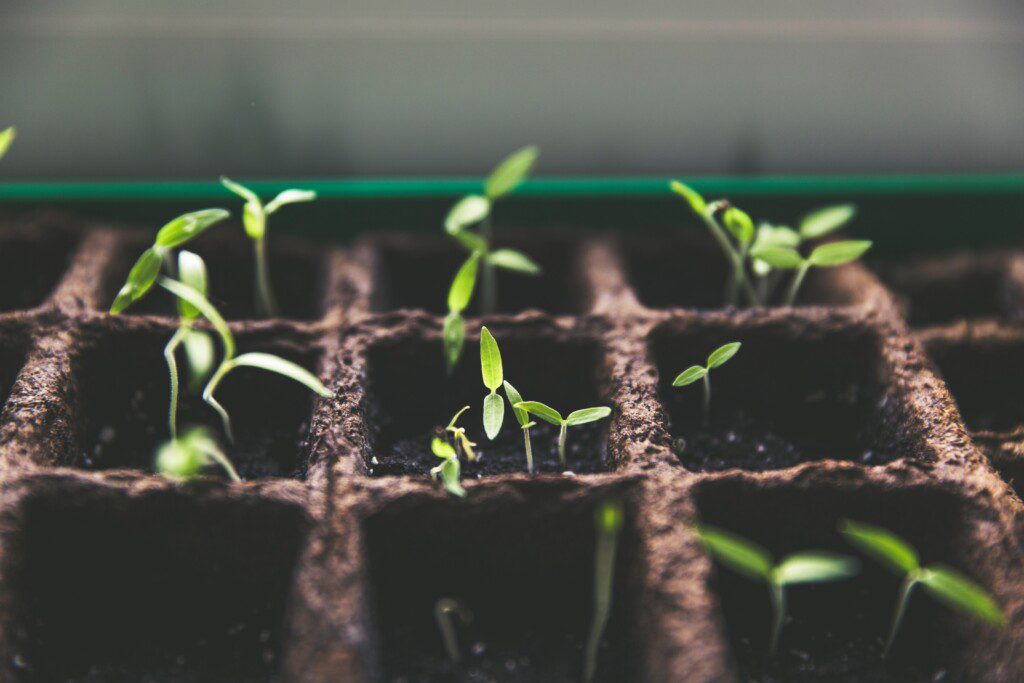
Both provide small amounts of direct heat to the bottom of containers and seedlings. These can be ideal for starting off seeds in the late winter or just to provide a bit of a additional support.
Credits
Photo by Annie Spratt on Unsplash
Photo by Steve Johnson on Unsplash
Photo by Markus Spiske on Unsplash